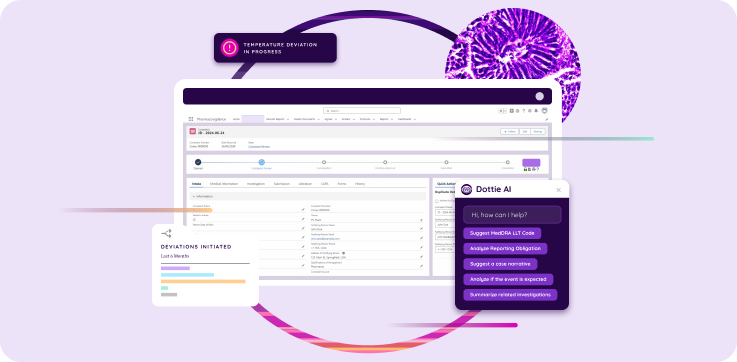
eQMS (Electronic Quality Management System) Explained


Quality is a core requirement in life sciences. It protects patients, supports regulatory approvals, and keeps products moving through development, manufacturing, and post market monitoring. Every record, signature, and decision must be traceable and defensible. That level of control is difficult to achieve when documents are stored in file shares, training is tracked in spreadsheets, and critical processes are managed through email.
An Electronic Quality Management System, or eQMS, provides the digital structure that brings all of this together in one controlled environment. It is the system that defines how quality processes are executed, how documents are managed, how training is completed, and how deviations, CAPAs, and audits are handled from start to finish. Instead of relying on scattered tools and manual follow up, the eQMS becomes the operational backbone for quality.
For life sciences organizations, the move to an eQMS is not simply a technology upgrade. It is a shift in how the company manages risk, prepares for inspections, and supports growth.
This guide explains what an eQMS is, why it matters, how it aligns with regulations, and how it supports quality across the entire product lifecycle.
1. What Is an Electronic Quality Management System
An Electronic Quality Management System is a software platform that centralizes quality processes and records. It is the digital home for policies, SOPs, work instructions, training plans, deviations, CAPAs, audits, complaints, and risk assessments. The system controls how these items are created, reviewed, approved, executed, and archived.
In a paper based or hybrid QMS, documents might live in binders, local drives, or shared folders. Training records might be stored in spreadsheets or filing cabinets. Deviations may be tracked in a combination of forms, email threads, and disconnected databases. It is possible to pass inspections this way, but it becomes increasingly difficult as the organization grows and the regulatory environment becomes more demanding.
An eQMS replaces this complexity with a structured digital environment. Documents are authored, reviewed, and approved in the system. Once approved, they become the single source of truth for how work is done. Training is automatically linked to the documents that define procedures. Deviations, complaints, and nonconformances are entered into standardized electronic forms, then routed through defined investigation steps. CAPAs are initiated from these events and are followed through root cause analysis, corrective actions, and effectiveness checks.
The eQMS records who did what, when, and why. Each action is logged in an audit trail. Signatures have clear meaning, such as authorship, review, or approval. Records are stored in a way that preserves integrity. Nothing disappears into a personal inbox or gets lost on a shared drive.
In that sense, an eQMS is the digital expression of the quality management system. The policies and procedures still matter, but the way they are executed and controlled becomes more reliable, more visible, and more scalable when supported by an electronic platform.

2. Why eQMS Matters in Regulated Industries
The need for an eQMS becomes clear when you consider the specific challenges faced by regulated life sciences organizations.
First, regulatory expectations have grown more complex. Agencies do not simply look for a collection of policies and SOPs. They look for evidence that those documents are followed in practice, that changes are controlled, that training is current, and that issues are investigated and resolved in a consistent way. With manual systems, it can be difficult to prove that the documented procedures actually match day to day operations.
An eQMS creates a direct connection between defined processes and execution. When a procedure changes, the system assigns updated training to affected employees and records completion. When a deviation occurs, the system links the event to the relevant batch, product, or system and tracks the investigation. When a CAPA is initiated, the eQMS records the root cause, the proposed actions, the owners, and the due dates. This provides a continuous chain of evidence that supports inspection readiness.
Second, manual systems introduce a high risk of error and inconsistency. A paper form might be completed incorrectly. A spreadsheet might be updated by one person but not by another. An email reminder might be missed. Over time, these small inconsistencies add up and can lead to audit findings or quality issues. An eQMS reduces this risk by guiding users through standard workflows, enforcing required fields, and providing automated notifications.
Third, organizations need visibility into quality performance. Leaders must know where risks are emerging, where processes are slowing down, and where recurring issues appear. In a fragmented environment, gathering this information often requires manual reporting efforts that pull data from multiple systems. An eQMS consolidates records in one place, creating the foundation for dashboards and analytics. This helps leadership move from reactive response to proactive management.
Fourth, growth amplifies the limitations of manual systems. As organizations add new sites, expand into new markets, or outsource activity to partners, the number of documents, records, and stakeholders increases. Without a central system, each site may develop its own way of managing quality. That can lead to inconsistent practices and uneven inspection readiness across the network. An eQMS provides a harmonized framework that can be applied across all sites, products, and partners.
Finally, digital quality systems set the stage for future technologies. Artificial intelligence, advanced analytics, and connected manufacturing rely on structured, machine readable data. If quality information is locked in paper files or unstructured documents, it is much harder to leverage these innovations. An eQMS creates a standardized, digital dataset that can support more advanced capabilities over time.
3. Regulatory Requirements for Electronic Systems
Moving quality processes into an electronic system introduces additional regulatory responsibilities. Regulators recognize that electronic records can support better control and traceability. At the same time, they expect organizations to ensure that those records are secure, accurate, and reliable.
In the United States, FDA 21 CFR Part 11 defines the criteria under which electronic records and electronic signatures are considered trustworthy and equivalent to paper records with handwritten signatures. It requires organizations to validate systems that create or maintain electronic records. It also requires secure, computer generated, time stamped audit trails that capture the date and time of user actions. Access must be restricted to authorized individuals, and electronic signatures must be unique, verifiable, and clearly linked to the person and the meaning of the signature.
In the European Union, Annex 11 provides similar guidance for computerized systems used in GxP environments. It emphasizes system validation, data integrity, access control, change management, and audit trails. It expects clear documentation of how systems are configured, tested, and maintained across their lifecycle.
An eQMS must be implemented with these expectations in mind.
That means clearly defining requirements for each function, validating that the system performs as intended, and documenting configuration and testing. It means establishing controlled user accounts and roles. It means ensuring that audit trails cannot be altered and that records are preserved for required retention periods.
Beyond Part 11 and Annex 11, Good Manufacturing Practice, Good Clinical Practice, and Good Laboratory Practice all rely heavily on documentation and data integrity. These frameworks require that records be complete, attributable, and contemporaneous. They expect that changes are controlled and that records can be retrieved quickly during an inspection. An eQMS supports these expectations by providing a controlled environment where records are captured in real time, linked to specific users, and stored securely.
ISO standards also influence how eQMS environments are designed. ISO 9001, ISO 13485, and ISO 14971 all require documented procedures, controlled records, and evidence of implementation. ISO 27001 adds a formal structure for information security. A well designed eQMS aligns with these frameworks by supporting controlled documentation, access management, and robust change control.
The key point is that electronic systems do not reduce regulatory obligations. They change how those obligations are met. A validated eQMS can make it easier to comply with these frameworks by embedding the required controls directly into daily workflows.
4. Comparing eQMS to Paper and Hybrid Systems
To understand the impact of an eQMS, it helps to compare it with paper based and hybrid quality systems.
In a paper-based system, quality documents are often printed and distributed. Procedures might be kept in binders on the production floor. Training records might consist of signed attendance sheets stored in filing cabinets. Deviations and CAPAs might be documented on forms that move between departments manually. Each of these pieces can be compliant if managed carefully. However, the approach is slow and resource intensive. It relies on people to route documents, maintain filing systems, and track deadlines. It also makes global collaboration challenging because access to information often depends on physical location.
Hybrid systems introduce some digital elements, such as shared drives, local document repositories, or email based approvals, but do not provide a unified platform. In a hybrid environment, users might store SOPs in a shared folder, track training in a spreadsheet, and manage CAPA in a separate tool. This can be an improvement over pure paper, but it still leads to fragmented data and process gaps. Version control is often fragile. Audit trails may be incomplete. Reporting usually requires manual effort.
An eQMS consolidates these activities into one environment. Document control, training, deviations, CAPAs, and audits share the same data model and the same user interface. The system guides users through standard workflows and records every step. This not only strengthens compliance but also reduces the time needed to perform routine quality tasks.
The difference becomes most obvious when an inspection is announced or an unannounced audit occurs. In a paper or hybrid environment, teams often scramble to gather records, verify that training is up to date, and reconcile different versions of documents.
In a mature eQMS environment, the necessary records are already organized.
Users can search by product, batch, process, or person and retrieve complete histories within seconds. That shift in readiness can significantly reduce stress and support better outcomes during inspections.
5. Documentation in an eQMS Environment
Documentation is still the backbone of quality management in an electronic environment. The difference is that documents are no longer static files sitting in folders. They are active objects that drive workflows, training, and traceability.
Policies define the organization’s quality commitments and governance. In an eQMS, policies are controlled documents with defined owners, review cycles, and approval chains. They live alongside the procedures and work instructions that they inform.
Standard Operating Procedures describe how specific processes must be carried out. In an eQMS, SOPs are created within the system or uploaded and then subjected to defined review and approval steps. The system controls who can edit, who can review, and who can approve. It maintains previous versions with full change history. Once a new version is effective, the system can prompt users to complete training, then records completion as part of the permanent quality record.
Work instructions and job aids provide detailed guidance for specific tasks. They might describe the exact steps for equipment setup, visual inspection criteria, or data entry rules. An eQMS manages these documents under the same control framework as SOPs and links them to specific roles or processes.
Forms and templates standardize data capture. In an eQMS, they become electronic records that prompt users to provide required information. For example, a deviation form may require the user to specify the product, batch, date, location, and immediate actions taken. This improves data quality and makes it easier to analyze trends later.
Records are the evidence that processes were followed. These include training records, deviation reports, CAPA histories, audit reports, change control records, equipment logs, and batch records. An eQMS stores these records with full metadata, including authorship, timestamps, and linked documents. This provides strong traceability and supports data integrity.
Finally, system documentation supports the eQMS itself. Requirements, design specifications, validation protocols, test results, and change control records for the system must be maintained. A strong eQMS vendor will provide tools and templates that make this manageable and repeatable.
6. Core Quality Processes Managed in an eQMS
An eQMS is most valuable when it connects all of the critical quality processes into one coherent environment. These processes often exist in some form even before a digital system is implemented, but the eQMS provides structure, consistency, and traceability.
Document management is typically one of the first processes organizations bring into an eQMS. Documents move through defined stages such as draft, in review, approved, effective, and obsolete. The system ensures that only authorized users can edit documents and that reviews involve the right stakeholders. It records comments, decision history, and approvals. Employees no longer have to guess which version is current. They simply open the system and access the latest approved document.
Training management becomes much more efficient in an eQMS.
Instead of maintaining training matrices in spreadsheets or on paper, the system links training requirements directly to documents and roles. When a new SOP is approved, the eQMS identifies all users who need training and creates assignments. As users complete training, the system records dates and outcomes. Managers can see training status by individual, by team, or by document. During an inspection, training histories can be retrieved quickly and presented with confidence.
Deviation and nonconformance management also benefit from a structured electronic approach. In an eQMS, a deviation is created as an electronic record with defined fields that capture the who, what, when, where, and initial impact. The system routes the deviation to the appropriate owner for investigation. Root cause analysis is documented directly in the record. If corrective or preventive actions are required, they are linked to the original deviation. Over time, the eQMS builds a complete history of how deviations arise and how they are resolved.
CAPA management is closely linked to deviations, audits, complaints, and risk assessments. CAPAs begin with a clear problem statement and root cause analysis. The eQMS then supports definition of corrective and preventive actions, assignment of responsibilities, and tracking of due dates. The system prompts owners to update progress and document verification activities. Once the CAPA is closed, the record provides a complete narrative of the issue, the root cause, the actions taken, and the evidence that those actions were effective.
Change control is essential for maintaining stability in a regulated environment. Changes to processes, documents, equipment, or systems must be evaluated for impact and approved before implementation. In an eQMS, change requests are submitted through structured forms that require justification and impact assessment. The system routes the change to cross functional reviewers, such as quality, operations, regulatory, and IT. Once approved, the change is implemented according to a defined plan. Any related updates to documents, training, or validation are tracked within the same record. This ensures that changes are intentional, evaluated, and traceable.
Audit management benefits significantly from digitization. Internal audits, supplier audits, and external inspections generate findings that must be recorded and tracked. In an eQMS, audit plans, checklists, and reports live in the system. Findings are captured as records and linked to CAPAs or other follow up activities. Audit histories can be reviewed to identify repeated findings or areas that require additional attention. This helps organizations move from a reactive audit posture to a proactive continuous improvement mindset.
Risk management is increasingly recognized as a central element of quality.
An eQMS can support risk assessments by providing templates and tools for scoring severity, likelihood, and detectability.
Risks can be associated with specific processes, products, or suppliers. They can be linked to deviations and CAPAs to show how risk control measures are working. This integrated view supports compliance with expectations under ISO 14971 and ICH Q9 and also helps teams prioritize improvement efforts.
Complaint management often sits at the interface between quality and customer facing functions. Complaints may originate from patients, health care providers, distributors, or internal staff. In an eQMS, complaints are logged in a consistent format, evaluated for severity, and investigated as needed. The system records timelines and decisions, such as whether regulatory reporting is required. It also links complaints to CAPAs and product quality reviews. This provides a clear view of how field feedback influences product and process improvement.
Supplier quality management is another area where electronic systems provide significant benefits. Suppliers are critical partners in the life sciences supply chain. Their performance affects product quality and compliance. An eQMS can record supplier qualifications, audits, corrective actions, and performance metrics. This allows organizations to monitor supplier risk and engage with partners in a structured way.
Electronic batch records connect the eQMS to manufacturing operations. When batch documentation is digital, data is captured directly at the point of use. Instructions, process parameters, and in process checks are all presented in structured formats. The eQMS or associated systems can enforce completion of required steps, flag missing data, and generate reports for batch review. This reduces the time needed to release batches and strengthens data integrity.
Taken together, these processes form a connected quality ecosystem. A single event in one area, such as a deviation on the shop floor, can trigger actions in others, such as a CAPA, a document change, and new training assignments. An eQMS makes those connections visible and traceable.
7. Industries That Depend on eQMS
While electronic quality systems can be used in a range of sectors, certain industries rely on them as core infrastructure.
Pharmaceutical and biopharmaceutical companies operate under some of the most demanding regulatory frameworks. Every step from development through commercial manufacturing involves detailed documentation and evidence of control. An eQMS supports these requirements by standardizing documentation, deviations, CAPAs, and change control across manufacturing and quality operations. It helps ensure that batch records, investigations, and quality decisions are documented comprehensively and are always accessible during inspections.
Biotechnology organizations face similar challenges, often with additional complexity related to novel technologies, specialized processes, and rapid growth. As biotechs progress from early research to clinical trials and later to commercial production, their quality needs expand quickly.
An eQMS provides a scalable foundation that can support this evolution.
It allows small teams to establish disciplined quality practices early, which reduces risk when regulators review clinical trial applications or marketing submissions.
Medical device and diagnostics companies must comply with standards such as ISO 13485 and ISO 14971 as well as regulatory frameworks including FDA QMSR and EU MDR or IVDR. An eQMS connects design controls, risk management, production controls, and post market surveillance. It supports creation and maintenance of design history files, device master records, and technical documentation. Complaint handling and field actions can be documented and linked to design changes and CAPAs. This integrated approach is essential for maintaining device safety and performance.
Contract manufacturers and contract development and manufacturing organizations operate in a complex environment. They must support multiple clients, each with their own requirements and regulatory obligations, while maintaining their own quality system. An eQMS provides a structured environment that supports client specific workflows and documentation while preserving a unified quality framework. It allows contract organizations to demonstrate control and transparency to their clients and to regulators.
Cosmetics and personal care manufacturers are encountering an increasingly regulated landscape. Requirements under MoCRA in the United States and established cosmetics regulations in the European Union emphasize product safety, ingredient transparency, and complaint management. An eQMS supports these expectations by managing product information files, safety assessments, change control, and field feedback in a controlled, traceable way.
Clinical research organizations and sponsors also benefit from an eQMS. They manage SOPs, training, and trial documentation across multiple sites and partners. An eQMS helps ensure that investigators and study staff are trained on current procedures, that deviations are handled consistently, and that documentation is inspection ready for regulatory authorities and ethics committees.
Across all of these industries, the common theme is that quality and compliance cannot depend on fragmented tools. The complexity of products, processes, and regulatory expectations requires an integrated digital approach.
8. How an eQMS Supports Audits, Inspections, and Continuous Improvement
Audits and inspections are defining moments for any quality system. They test not only the content of procedures and records, but also the organization’s ability to retrieve information and tell a coherent story about how quality is managed. An eQMS plays a central role in this.
In an electronic system, records are organized by product, process, site, and time period. When an inspector asks for training history for a specific operator, the eQMS can retrieve it in seconds. When they request the CAPA associated with a certain deviation, the system shows the full history of the issue, including root cause analysis, actions taken, and effectiveness verification. When they ask how a change was managed, the eQMS presents the complete impact assessment, review comments, and approvals.
This level of organization reduces the stress of inspections and demonstrates that quality is not an afterthought. It shows that the organization has discipline in how it manages documents, training, and investigations.
An eQMS also enhances continuous improvement.
Data from deviations, CAPAs, audits, and complaints accumulates over time. Because the data is structured and stored in a single system, it can be analyzed for patterns. For example, trends might reveal that deviations often occur on a particular line, shift, or product family. CAPA data might show repeated root causes in a specific process. Audit findings might cluster around certain sites or departments.
These insights help the organization identify systemic issues and prioritize improvement projects. Instead of responding to each event in isolation, quality and operations teams can address underlying causes. Over time, this reduces the frequency and severity of issues and strengthens overall performance.
Management review processes also benefit from electronic systems. When leadership needs to evaluate the state of the quality system, an eQMS provides objective data on key indicators such as CAPA closure times, audit completion rates, training status, and complaint trends. This supports a more informed discussion and a clearer link between quality performance and business decisions.
9. Integrations, Data, and Analytics in an eQMS
An eQMS becomes even more powerful when it connects with other enterprise systems.
Integration with ERP systems aligns quality records with materials, batches, and financial data. When a deviation involves a specific batch, the ERP connection allows teams to trace the impact on inventory, customers, and suppliers. Integration with manufacturing execution systems connects quality events directly to production steps and process parameters. Integration with laboratory systems links test results to batch records, deviations, and CAPAs.
Integration with HR systems ensures that training requirements are aligned with job roles and organizational changes. When employees join, change positions, or leave, the eQMS can adjust training assignments and access rights accordingly. Integration with customer relationship management systems helps capture complaints and feedback in a controlled way and link them to internal investigations.
These connections reduce manual data entry, avoid discrepancies between systems, and create rich context for understanding quality events.
Analytics and reporting capabilities within the eQMS allow organizations to use this connected data effectively. Dashboards can show real time status of critical metrics, such as the number of open deviations, CAPAs by risk level, audit findings by site, or training completion rates by department. Users can filter data by time period, product, site, or other attributes to explore trends and patterns.
Different roles in the organization need different views. Executives may focus on a high level overview of quality performance. Site managers may monitor local indicators, such as training compliance and deviation closure times. Quality specialists may track specific initiatives or areas of concern. An eQMS can present tailored dashboards and reports to each audience, helping them focus on what matters most.
10. AI in Electronic Quality Management
Artificial intelligence is beginning to influence how organizations use their eQMS. While traditional eQMS platforms already deliver significant value, AI can enhance search, analysis, and decision support.
One of the first areas where AI adds value is information retrieval. Quality systems accumulate large volumes of documents and records. Finding the right information quickly can be challenging, especially for new employees or users who are less familiar with the system structure. AI driven search can interpret natural language questions and return relevant documents, records, and data points. Instead of navigating through menus or relying on complex filter combinations, a user can ask the system to show recent CAPAs related to a specific process, or to present all deviations involving a certain piece of equipment.
AI can also support pattern recognition and risk insight.
By analyzing data across deviations, CAPAs, complaints, and audit findings, AI can identify emerging trends that may not be obvious in individual records. For example, it might reveal that a particular supplier is connected to an increasing number of investigations, or that certain products show a higher rate of training related errors. These insights help organizations act before issues escalate.
Another potential application is assistance with root cause analysis and CAPA planning. AI can suggest potential causes and corrective actions based on historical cases with similar characteristics. The goal is not to replace human judgment but to provide a starting point that accelerates investigation. Quality teams remain responsible for evaluating suggestions and making final decisions, but they can work more efficiently.
AI can also help prioritize workload. In a busy quality environment, not every issue carries the same level of risk or urgency. AI can evaluate factors such as product classification, patient impact, complaint volume, and regulatory implications to highlight which events deserve immediate attention. This helps teams allocate resources in a way that aligns with risk.
All of these capabilities must be implemented within a governed framework. In regulated environments, it is not enough for AI to provide accurate suggestions. The logic must be transparent enough to support explanation during audits and inspections. Organizations need to maintain control over how AI is trained and how its outputs are used. An eQMS that integrates AI must still maintain complete audit trails, validation evidence, and role based access.
11. How to Select and Implement an eQMS
Selecting an eQMS is both a strategic and operational decision. It affects how quality processes run every day, how teams collaborate, and how the organization evolves over time.
When evaluating solutions, organizations should consider how well each system aligns with their regulatory requirements and quality processes. The eQMS should support core functions such as document control, training management, deviation and CAPA handling, change control, complaints, audits, and risk management. It should also offer flexibility to adapt workflows to the organization’s specific needs without excessive customization.
Scalability is another key factor. The system should support current operations and also be capable of handling additional sites, products, and regulatory obligations. If the organization expects to grow or to expand into new regions, the eQMS should be able to accommodate that growth without major redesign.
Integration capabilities are equally important. An eQMS does not exist in isolation. It must connect to ERP, manufacturing, laboratory, HR, and customer systems to provide a complete view of quality. Evaluating the ease with which the eQMS can connect to existing systems helps avoid future integration challenges.
Validation support is a practical consideration. Life sciences organizations must validate their eQMS to show that it performs reliably. Vendors that provide validation templates, documentation, and guidance can significantly reduce the workload and shorten implementation timelines.
Implementation requires careful planning. Many organizations start with core processes such as document control and training management because these establish the foundation for other quality workflows. Once those modules are live, they extend the system to deviations, CAPAs, change control, and audits. In later phases, they may add supplier management, design control, clinical processes, or electronic batch records.
Change management is critical throughout. People must understand why the new system is being introduced and how it will improve their work. Involving representatives from quality, operations, regulatory, and IT during configuration and testing helps build buy in and ensures that processes make sense in practice. Training should be tailored to each role so that users know exactly how to perform their tasks in the eQMS.
Data migration needs special attention. Moving from legacy systems or paper records into a new eQMS involves decisions about which records to migrate, how to structure them, and how to ensure integrity during the transition. Clear criteria for what must be migrated and what can remain in archived form helps control scope.
Once the system is live, continuous improvement should be part of the plan. Users will identify enhancements that make processes more efficient.
The organization can use data from the eQMS to refine workflows and improve overall performance.
An eQMS is not a static implementation. It is a living part of the quality system that should evolve as the organization learns and grows.
12. How Dot Compliance Supports eQMS Maturity
Dot Compliance provides an eQMS that is purpose built for life sciences and delivered natively on the Salesforce platform. It is designed to support organizations at different stages of quality maturity and to provide a clear path from basic digitalization to advanced AI enabled operations.
For organizations that are moving away from paper or simple hybrid systems, Dot Compliance offers a ready to use foundation that covers core quality processes. This includes document control, training management, CAPA, change management, and audit management. These capabilities allow organizations to establish a controlled, validated digital environment quickly and with less configuration effort than a fully bespoke solution.
As the organization matures, Dot Compliance supports expansion into broader areas of quality and compliance. Additional modules can cover electronic batch records, design control, supplier quality management, complaint handling, clinical and regulatory workflows, and more. This allows organizations to harmonize processes across functions and sites while using a consistent data model and user experience.
One of the advantages of the Dot Compliance approach is its use of a platform that is widely adopted and trusted for enterprise applications. Running natively on Salesforce means the eQMS benefits from robust security, scalability, and integration tools. It also allows organizations to connect quality data with other enterprise data in a controlled way.
Dot Compliance has also invested in AI driven capabilities that operate within a governed framework. These capabilities can help users find information faster, analyze quality data for patterns, and support decision making. At the same time, the system maintains clear audit trails, role based access, and validation evidence.
Throughout the implementation and lifecycle, Dot Compliance provides expertise in life sciences regulations and quality practices. This includes support for validation activities, configuration aligned with industry standards, and best practices for deployment and adoption. The result is an eQMS that is not only technically capable but also grounded in the realities of regulated operations.
Frequently Asked Questions (FAQs): eQMS (Electronic Quality Management System)
What is an Electronic Quality Management System (eQMS)?
An eQMS is a software platform that centralizes quality processes and records in one controlled environment. It becomes the digital home for policies, SOPs, work instructions, training, deviations, CAPAs, audits, complaints, and risk assessments. Instead of storing information in file shares, spreadsheets, and email threads, an eQMS controls how quality work is defined, executed, approved, and archived, with full audit trails and role-based access.
Why does an eQMS matter in regulated life sciences?
In regulated industries, it is not enough to have policies and SOPs. Regulators expect proof that procedures are followed, changes are controlled, training is current, and issues are investigated and resolved in a consistent way. Manual and hybrid systems make it hard to show this connection between “what we say we do” and “what we actually do.” An eQMS links procedures to training, records every deviation and CAPA, and builds a continuous chain of evidence that supports inspection readiness.
Is an eQMS required by regulators like FDA or EU authorities?
Regulations do not mandate a specific brand or type of eQMS, but they do require trustworthy, traceable, and controlled records. Frameworks such as FDA 21 CFR Part 11, EU Annex 11, GMP, GCP, and GLP set expectations for data integrity, audit trails, access control, and system validation. An eQMS is the most practical way to meet these expectations at scale. Without an electronic system, it becomes difficult to maintain complete, contemporaneous, and retrievable records across sites, products, and partners.
How does an eQMS relate to 21 CFR Part 11 and EU Annex 11?
Part 11 and Annex 11 define when electronic records and electronic signatures can be considered equivalent to paper and handwritten signatures. They require system validation, secure and time-stamped audit trails, controlled access, and unique, verifiable signatures. An eQMS is implemented with these requirements in mind. It is validated against defined requirements, configured with clear roles and permissions, and designed to preserve records and audit trails for the required retention period.
How is an eQMS different from paper or hybrid quality systems?
Paper systems rely on printed documents, manual routing, physical signatures, and filing cabinets. Hybrid systems scatter quality work across shared drives, email, and spreadsheets. Both models can work in small, simple environments, but they struggle as volumes, sites, and regulatory demands grow. An eQMS replaces this fragmentation with standard workflows, enforced version control, automated notifications, and a single source of truth for quality records. It reduces manual follow up and makes global collaboration and reporting more straightforward.
What quality processes should be managed in an eQMS?
An eQMS should manage the core processes that define and prove quality. This includes document control, training management, deviations and nonconformances, CAPA, change control, audits, complaints, risk management, and (where relevant) electronic batch records and supplier quality. These processes should be connected inside the system. A deviation can trigger a CAPA, which drives a document change, which triggers new training. The eQMS keeps that chain visible and traceable.
Which industries depend most on eQMS?
Life sciences sectors rely heavily on eQMS: pharmaceutical, biopharmaceutical, biotechnology, medical device, diagnostics, contract manufacturers (CMOs/CDMOs), cosmetics and personal care, clinical research organizations, and other regulated healthcare players. In these environments, quality decisions affect patient safety, regulatory approvals, and market access. An eQMS helps standardize quality across products, sites, and partners and supports the documentation depth expected by agencies and customers.
How does an eQMS support audits and inspections?
An eQMS organizes records so they can be retrieved quickly by product, batch, process, site, or person. During an audit or inspection, teams can pull training histories, deviation and CAPA files, change control records, and batch documentation in seconds. This reduces scramble, shows control, and makes it easier to answer follow-up questions. Because all actions are logged with timestamps and user IDs, the eQMS also demonstrates strong data integrity and traceability.
What role does AI play in an eQMS?
AI enhances how organizations use their eQMS data. It can speed up search (“show CAPAs related to this process”), highlight patterns across deviations, CAPAs, complaints, and audit findings, suggest starting points for root cause analysis, and help prioritize work based on risk. In a regulated environment, AI must live inside a governed eQMS, not sit outside it. The underlying system still provides validation, audit trails, access control, and the official system of record. AI sits on top as a controlled assistant, not a replacement.
How should organizations approach selecting and implementing an eQMS?
Selection should start with regulatory and business needs. The system must support required processes (document control, training, deviations, CAPA, change control, audits, complaints, risk, etc.), scale with additional sites and products, and integrate with ERP, manufacturing, lab, HR, and CRM systems. Implementation usually begins with document control and training, then extends to deviations, CAPA, change control, and audits. Success depends on clear requirements, strong validation support, thoughtful data migration, and change management that brings quality, operations, regulatory, and IT into the process.
How does Dot Compliance support eQMS maturity?
Dot Compliance delivers an eQMS built for life sciences on the Salesforce platform. It gives organizations a ready-to-use foundation for core processes and a path to expand into areas like electronic batch records, design control, supplier quality, complaint handling, and clinical or regulatory workflows. The platform’s architecture supports security, integration, and scale. Dot Compliance also embeds AI capabilities within a governed framework and provides regulatory and validation expertise, so teams can move from basic digitalization to advanced, data-driven quality management without losing control or compliance.
Final Thoughts
An electronic Quality Management System has become a central requirement for life sciences organizations that want to operate with confidence in a complex regulatory environment. It transforms quality management from a patchwork of documents and spreadsheets into a coherent, digital system that connects people, processes, and data.
With an eQMS, quality processes become more reliable and more transparent.
Documents are controlled and accessible. Training is aligned with current procedures and fully traceable. Deviations and complaints are captured and investigated in a consistent way. CAPAs are documented from problem statement through root cause analysis and effectiveness checks. Audits become opportunities to demonstrate control rather than moments of crisis.
Beyond compliance, an eQMS supports better decisions. It provides real time visibility into quality performance across sites and functions. It allows organizations to identify trends, prioritize risks, and measure the impact of improvement initiatives. As AI and analytics capabilities continue to evolve, an eQMS provides the data foundation needed to take advantage of these advances in a controlled and compliant way.
For many life sciences organizations, the question is no longer whether to implement an eQMS, but how to select the right system and deploy it effectively. That decision shapes how quality is managed, how teams work together, and how the organization responds to new regulatory and market pressures.
By choosing an eQMS that is aligned with regulatory expectations, built for life sciences, and capable of growing with the business, organizations can move beyond manual processes and legacy tools.
They can build a quality management environment that supports both compliance and innovation.
Dot Compliance provides an example of this approach, combining a robust eQMS foundation with platform strength and AI enabled insight. For organizations that want to modernize their quality operations, it offers a path from initial digitalization to advanced, data driven quality management.
An effective eQMS is not just a system. It is the structure that allows quality to function as a strategic capability, supporting safe products, compliant operations, and sustainable growth.